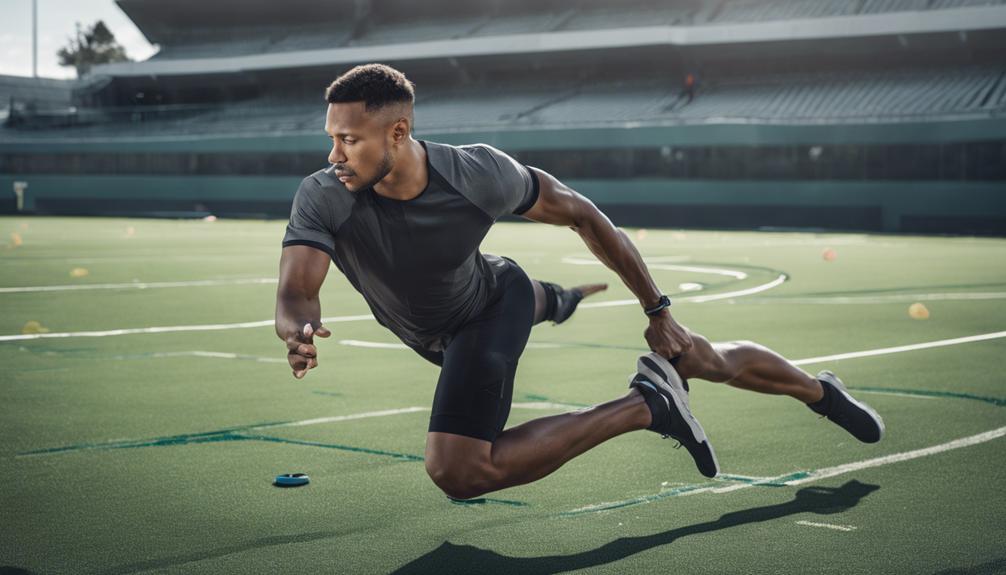
Cutting-edge technology in sports has transformed training and performance with real-time monitoring, data analytics, virtual reality, AI coaching tools, and smart equipment advancements. Wearable tech tracks key metrics like heart rate and speed for personalized training. Data analytics tailor regimens using metrics for peak performance. Virtual reality hones skills and decision-making. AI tools provide personalized feedback and guidance. Smart equipment offers detailed insights. Biometric monitoring and recovery aid workload management. Training simulation platforms provide scenario replication. GPS tracking optimizes routines. Performance-enhancing apps track workouts and goals. Explore the vast landscape of tech advancements in sports training and performance.
Wearable Technology Impact
The impact of wearable technology on sports training and performance has greatly transformed the way athletes monitor and optimize their physical activities. Wearable devices such as smartwatches, fitness trackers, and sensors embedded in clothing or equipment provide athletes with real-time data on various metrics like heart rate, speed, distance, and even technique analysis. This continuous stream of information allows athletes and their coaches to make data-driven decisions, leading to more efficient and personalized training programs.
One of the key benefits of wearable technology in sports is the ability to track performance metrics accurately. Athletes can now monitor their progress over time, set specific goals, and adjust their training routines accordingly. This instant feedback loop enables athletes to make immediate improvements in their technique, endurance, and overall performance.
Moreover, wearable technology has revolutionized injury prevention and recovery in sports. By analyzing biomechanical data, athletes can identify movement patterns that may lead to injuries and take proactive measures to avoid them. Additionally, monitoring physiological markers can help athletes and trainers optimize recovery strategies, ensuring peak performance during competitions.
Data Analytics in Training
Data analytics in training offers valuable insights into athletes' performance and training progress. By analyzing training data and performance metrics, coaches and athletes can make informed decisions to optimize training programs and enhance overall performance. This data-driven approach helps identify strengths, weaknesses, and areas for improvement, leading to more targeted and effective training strategies.
Training Data Insights
Utilizing advanced analytics in training programs has revolutionized the way athletes prepare and perform in modern sports. Training data insights offer a comprehensive exploration into athletes' performances, helping coaches tailor training regimens to individual needs. By analyzing metrics such as heart rate variability, GPS tracking data, and biomechanical measurements, coaches can identify strengths and weaknesses to optimize training strategies.
These insights enable personalized training plans that enhance overall performance and reduce the risk of injuries. For example, data may reveal that a certain athlete excels in short sprints but fatigues quickly during longer distances. With this knowledge, coaches can tailor workouts to improve endurance while maintaining the athlete's sprinting prowess.
Moreover, training data insights provide real-time feedback, allowing for immediate adjustments during training sessions. Coaches can monitor workload management, track progress, and make data-driven decisions to maximize performance outcomes. As technology continues to evolve, the integration of data analytics in training programs will play an increasingly crucial role in shaping the future of sports performance.
Performance Metrics Analysis
Advanced performance metrics analysis plays a pivotal role in optimizing athletes' training regimens and enhancing their overall athletic capabilities. By leveraging data analytics, coaches and sports scientists can explore deeply into various performance metrics to identify strengths, weaknesses, and areas for improvement. This data-driven approach enables personalized training programs that target specific aspects of an athlete's performance, leading to more efficient and effective training outcomes.
In the context of performance metrics analysis, the following table provides examples of key metrics commonly analyzed in sports: These metrics help evaluate individual and team efficiency, enabling coaches and analysts to make data-driven decisions. Factors such as player endurance, reaction time, and scoring consistency are often highlighted, while less obvious influences, like the overlooked costs of homeownership, can affect an athlete’s financial stability and overall well-being. By understanding both performance indicators and external pressures, teams can better support their athletes on and off the field.
| Metric | Description | Importance |
|---|---|---|
| Speed | Measure of how fast an athlete moves | Essential for quick sports |
| Power Output | Amount of force generated in a movement | Critical for explosive sports |
| Heart Rate Variability | Reflects athlete's recovery and stress levels | Indication of fitness levels |
| Acceleration | Rate of change in velocity | Important for quick bursts |
Virtual Reality for Performance
Virtual Reality (VR) technology is revolutionizing the way athletes develop their skills by providing immersive and realistic training environments. Beyond physical practice, VR offers athletes the opportunity to engage in enhanced mental simulations, allowing them to visualize and strategize in a more dynamic way. Additionally, real-time performance assessment through VR systems enables coaches to provide immediate feedback and make data-driven decisions to enhance player performance.
VR for Skill Development
Incorporating cutting-edge technology into athletic training programs has revolutionized skill development, with Virtual Reality (VR) emerging as a key tool for enhancing performance. VR provides athletes with immersive experiences that simulate real-game scenarios, offering a unique training approach that enhances skill development in a controlled and repeatable environment.
One of the primary advantages of VR for skill development is its ability to provide athletes with immediate feedback on their performance. By analyzing their movements and decisions in real-time, athletes can identify areas for improvement and make adjustments on the spot. This instant feedback loop accelerates the learning process and helps athletes refine their skills more efficiently.
Furthermore, VR allows athletes to train in a safe environment without the risk of injury. By replicating high-pressure situations and complex game scenarios, athletes can enhance their decision-making skills and improve their reaction times, ultimately translating to improved performance on the field or court. Overall, VR technology is revolutionizing skill development in sports by providing athletes with innovative ways to train effectively and maximize their potential.
Enhanced Mental Simulation
Utilizing Virtual Reality technology for enhanced mental simulation has become increasingly prevalent in modern sports training programs, offering athletes a unique way to elevate their performance through immersive cognitive training experiences. By simulating game scenarios, opponents' strategies, and high-pressure situations, VR allows athletes to mentally rehearse and strategize in a realistic and interactive environment. This technology helps athletes improve decision-making, focus, and emotional control under stress, ultimately enhancing their overall performance on the field or court.
Moreover, VR mental simulation can also aid in injury recovery by allowing athletes to stay mentally engaged and connected to their sport during rehabilitation periods. This aspect is vital for maintaining motivation and reducing the psychological impact of being sidelined due to injury.
Real-Time Performance Assessment
How can modern sports training programs leverage real-time performance assessment tools to enhance athletes' training and on-field performance? Real-time performance assessment, particularly through the use of virtual reality (VR) technology, has revolutionized the way athletes train and prepare for competitions. By immersing athletes in simulated game scenarios, coaches and trainers can gather real-time data on their performance, allowing for immediate feedback and targeted adjustments.
Virtual reality headsets can provide athletes with a 360-degree view of a game situation, allowing them to make split-second decisions and react as they would in an actual match. This technology enables athletes to practice in high-pressure situations and develop their decision-making skills in a controlled environment.
Furthermore, real-time performance assessment through VR can track various metrics such as reaction times, movement patterns, and decision-making processes. Coaches can then analyze this data to identify strengths and areas for improvement, leading to more tailored training programs that address specific performance gaps.
AI Coaching Tools
AI coaching tools have revolutionized the way athletes receive personalized training and feedback in real-time. These tools harness the power of artificial intelligence to provide athletes with insights and guidance tailored to their specific needs and performance levels. By analyzing data from various sources such as wearables, video recordings, and biometric sensors, AI coaching tools can offer detailed feedback on technique, performance metrics, and injury prevention strategies.
One of the key benefits of AI coaching tools is their ability to provide immediate feedback to athletes during training sessions. For example, a tennis player using a smart racket equipped with AI technology can receive real-time analysis of their swing mechanics and footwork, allowing them to make instant adjustments to improve their game. Similarly, runners can use AI-powered apps to track their running form and receive audio cues on pacing and stride length while on the go.
Moreover, AI coaching tools can create personalized training programs based on an athlete's goals, strengths, and areas for improvement. These programs can adapt and evolve over time as the athlete progresses, ensuring that they are always working towards peak performance. Overall, AI coaching tools represent a significant advancement in sports technology, offering athletes unprecedented access to data-driven insights and personalized training strategies to help them reach their full potential.
Smart Equipment Advancements
Advancements in smart equipment technology have greatly impacted the way athletes train and compete, offering innovative solutions to enhance performance and optimize training routines. Smart equipment integrates technology to provide detailed data and insights, enabling athletes to make informed decisions about their training and technique. One significant advancement is the development of smart wearables, such as sensor-embedded clothing and accessories, which track various metrics like heart rate, speed, and even body positioning during movement.
These wearables allow coaches and athletes to monitor performance levels, identify areas for improvement, and reduce the risk of injuries by analyzing movement patterns. Additionally, smart equipment like sensor-equipped balls, rackets, or bats can provide specific statistics on ball trajectory, impact force, or spin rate, helping athletes fine-tune their skills with precision.
Another key aspect of smart equipment advancements is the incorporation of virtual reality (VR) and augmented reality (AR) technology in training simulations. Athletes can now immerse themselves in realistic scenarios that replicate game situations, allowing for repetitive practice and strategic decision-making in a controlled environment.
Moreover, smart equipment has enabled the development of connected training systems that synchronize data across multiple devices, providing a detailed overview of an athlete's performance. This interconnected ecosystem fosters collaboration between athletes, coaches, and sports scientists, leading to more tailored training programs and ultimately, improved athletic performance.
Biometric Monitoring Benefits
Utilizing biometric monitoring in sports offers athletes valuable insights into their physiological responses during training and competition. These systems provide real-time data on various biometrics like heart rate, oxygen saturation levels, and even sleep patterns, enabling athletes and coaches to make informed decisions to optimize performance and prevent injuries.
One significant benefit of biometric monitoring is the ability to track and manage workload. By monitoring metrics such as heart rate variability and training load, athletes can avoid overtraining and reduce the risk of burnout. This data-driven approach allows for personalized training programs tailored to individual needs, enhancing overall performance and recovery.
Moreover, biometric monitoring can help identify early signs of fatigue or potential health issues. By analyzing trends in biometric data, athletes and medical staff can intervene proactively, adjusting training regimens or providing necessary support to prevent setbacks.
Another advantage is the enhancement of recovery strategies. Biometric monitoring can assess the effectiveness of recovery protocols by tracking changes in key biometrics post-activity. This feedback loop enables athletes to fine-tune their recovery routines for better adaptation and readiness for subsequent training sessions or competitions.
Training Simulation Platforms
Training simulation platforms offer athletes a dynamic and immersive way to replicate real-life scenarios and enhance their skill development. These platforms utilize cutting-edge technology to create realistic training environments that closely mimic actual game situations. Athletes can engage in these simulations to improve decision-making, reaction times, and overall performance under pressure.
One of the key advantages of training simulation platforms is the ability to tailor exercises to specific sports and individual player needs. For example, a basketball player can work on their three-point shooting in a virtual basketball court, while a soccer player can practice penalty kicks in a simulated stadium environment. This level of customization allows athletes to focus on areas that need improvement and track their progress over time.
Moreover, training simulation platforms offer a safe space for athletes to experiment with new strategies and techniques without the fear of failure. Coaches can also use these platforms to analyze player performance, identify strengths and weaknesses, and provide targeted feedback for improvement.
GPS Tracking for Athletes
Athletes can enhance their performance and training through the use of GPS tracking technology. By utilizing GPS devices, athletes can gather valuable data that aids in optimizing their training routines, improving their overall performance, and minimizing the risk of injuries. These tracking devices provide athletes and coaches with detailed insights into various metrics such as speed, distance covered, acceleration, deceleration, and even heart rate during training sessions or competitions.
GPS tracking technology offers a wide range of benefits for athletes across different sports disciplines. The table below highlights some of the key advantages of incorporating GPS tracking into an athlete's training regimen:
| Advantages of GPS Tracking for Athletes | |
|---|---|
| 1. Performance Optimization | Real-time data feedback allows athletes to adjust their performance instantly. |
| 2. Injury Prevention | Monitoring workload helps in preventing overtraining and reducing the risk of injuries. |
| 3. Tactical Analysis | Coaches can analyze player positioning and movements to enhance team strategies. |
| 4. Personalized Training Plans | Data-driven insights enable the creation of customized training programs for individual athletes. |
| 5. Competition Preparation | Tracking performance metrics aids in preparing for specific opponents and adapting strategies accordingly. |
Tech-Driven Recovery Methods
As athletes aim for peak performance, tech-driven recovery methods have become essential in their training regimen. Wearable tech devices offer real-time data on recovery metrics, allowing athletes to optimize their rest periods. Additionally, data-driven sleep analysis tools provide valuable insights into sleep quality, aiding athletes in achieving peak recovery.
Wearable Tech for Recovery
Recent advancements in wearable technology have revolutionized recovery methods for athletes, offering real-time data and insights to optimize their post-training recuperation. These wearable devices track various physiological markers, providing athletes with valuable information to tailor their recovery strategies effectively. Here are four key ways wearable tech is transforming recovery in sports:
- Monitoring Recovery Status: Wearable devices can track metrics like heart rate variability, sleep quality, and overall fatigue levels to assess an athlete's recovery status accurately.
- Guided Rest and Recovery: By analyzing data on muscle recovery and exertion levels, wearable tech can provide personalized recommendations on rest periods and recovery activities for athletes.
- Injury Prevention: Wearable devices can detect movement patterns and biomechanical data to identify potential injury risks, allowing athletes and coaches to adjust training regimens accordingly.
- Enhancing Nutrition: Some wearable tech integrates nutrition tracking features to help athletes maintain effective fueling strategies for improved recovery and performance.
Data-Driven Sleep Analysis
Advancements in wearable technology have enabled data-driven sleep analysis to play a pivotal role in optimizing recovery methods for athletes. Monitoring sleep patterns, quality, and duration can provide valuable insights into an athlete's overall recovery process. By utilizing wearable devices equipped with sensors that track sleep metrics, coaches and sports scientists can gather detailed information on an athlete's sleep cycles, disturbances, and restfulness.
Data-driven sleep analysis allows for personalized recommendations to be made based on individual sleep patterns. For athletes, this means tailoring recovery strategies to improve sleep quality and guarantee sufficient rest for peak performance. By identifying factors that may be affecting sleep, such as stress, travel, or training load, adjustments can be made to enhance recovery and minimize the risk of overtraining or fatigue.
Incorporating data-driven sleep analysis into an athlete's training regime can lead to more effective recovery strategies, improved performance, and overall well-being. As technology continues to advance, the insights gained from sleep data analysis will likely play an increasingly significant role in athlete recovery and performance optimization.
Recovery Through Cryotherapy
Utilizing cutting-edge technology, cryotherapy has emerged as a prominent tech-driven recovery method in the field of sports performance optimization. Cryotherapy involves exposing the body to extremely cold temperatures for a short duration to promote faster recovery and reduce muscle soreness. Here are four ways in which cryotherapy benefits athletes:
- Decreased Inflammation: Cryotherapy helps reduce inflammation by constricting blood vessels and decreasing tissue metabolism, leading to decreased swelling and pain post-exercise.
- Improved Muscle Recovery: The cold temperatures in cryotherapy help improve circulation and oxygenate muscles, aiding in faster healing and recovery from intense workouts or injuries.
- Pain Management: Athletes often experience muscle soreness and pain after rigorous training sessions. Cryotherapy can help manage this pain by numbing the affected area and providing relief.
- Enhanced Performance: By facilitating quicker recovery and reducing muscle fatigue, cryotherapy can contribute to enhancing overall athletic performance and endurance levels.
Performance Enhancing Apps
In the field of sports technology, performance enhancing apps have revolutionized how athletes track and optimize their training routines. These apps offer a wide range of features designed to help athletes improve their performance, monitor their progress, and make data-driven decisions to enhance their training programs.
Performance enhancing apps provide athletes with tools to track their workouts, analyze their performance metrics, and set specific goals to work towards. These apps often integrate with wearable devices to collect data on metrics such as heart rate, pace, distance, and more, allowing athletes to gain valuable insights into their training sessions.
Moreover, these apps offer features like personalized training plans, performance analytics, and real-time feedback to help athletes make informed decisions about their training. By utilizing data and analytics, athletes can identify areas for improvement, track their progress over time, and make adjustments to their routines accordingly.
Additionally, performance enhancing apps often include social features that allow athletes to connect with coaches, teammates, and other athletes for support, motivation, and friendly competition. These social aspects can help athletes stay accountable, motivated, and engaged in their training programs.
Frequently Asked Questions
Can Wearable Technology Be Used in Sports Other Than Fitness Tracking?
Wearable technology in sports extends beyond fitness tracking to provide real-time data on athlete performance, injury prevention, and tactical analysis. These devices can monitor metrics like heart rate, acceleration, and distance covered during training and competition. They offer coaches and athletes valuable insights into physiological responses and biomechanics, helping optimize training programs and enhance overall performance. Wearable technology is a versatile tool that complements various sports disciplines beyond just fitness monitoring.
How Do Athletes Benefit From Virtual Reality in Performance Training?
Athletes benefit from virtual reality in performance training by immersing themselves in realistic simulations that enhance decision-making, spatial awareness, and reaction times. This technology allows athletes to practice in safe environments while experiencing game-like scenarios. By replicating real-world challenges, virtual reality training helps athletes improve their skills, increase their confidence, and optimize their performance on the field or court. Its interactive nature provides a dynamic and engaging platform for honing athletic abilities.
Are There AI Coaching Tools Tailored for Specific Sports Disciplines?
There are AI coaching tools tailored for specific sports disciplines. These tools utilize advanced algorithms to analyze performance data and provide personalized feedback to athletes. By focusing on the unique requirements of various sports, these AI tools can offer targeted training plans and strategies to help athletes improve their skills and performance. This tailored approach enhances the effectiveness of coaching and training methods, leading to better results for athletes in their respective sports disciplines.
What Are the Latest Advancements in Smart Equipment for Athletes?
The latest advancements in smart equipment for athletes include wearable technology that tracks biometric data, such as heart rate, oxygen levels, and movement patterns. These devices provide real-time feedback to athletes and coaches, allowing for more personalized training programs and performance optimization. Additionally, smart equipment like sensor-embedded clothing and augmented reality training tools are revolutionizing the way athletes train and compete, enhancing their overall performance and reducing the risk of injuries.
How Does Biometric Monitoring Improve Athletes' Overall Performance?
Biometric monitoring enhances athletes' overall performance by providing real-time data on various physiological parameters like heart rate, oxygen saturation, and body temperature. This data allows coaches and trainers to tailor training programs, optimize recovery strategies, and prevent injuries. By closely monitoring athletes' biometrics, teams can make informed decisions to enhance performance, tailor nutrition plans, and help athletes reach their peak potential in a safe and efficient manner.