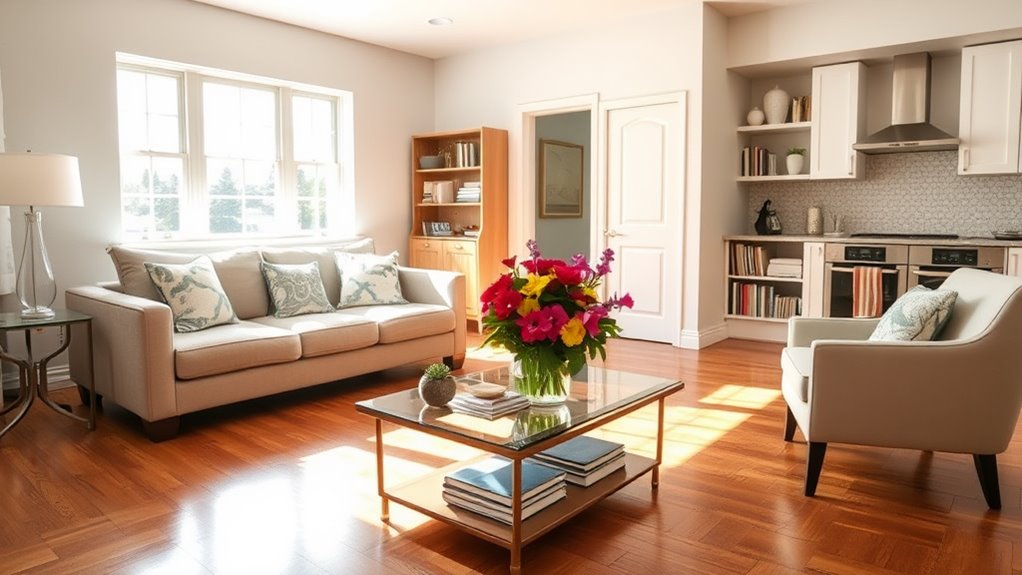
To prepare a home for a successful inspection, one should declutter and organize the space, addressing minor repairs to improve aesthetics. A thorough cleaning of all areas, especially kitchens and bathrooms, is essential. Ensuring accessibility by clearing pathways and entrances promotes a welcoming environment for inspectors. Moreover, gathering important documents, such as maintenance records and warranties, helps demonstrate care and transparency. By following these steps, the home can present itself positively, with further insights available on further preparations.
Declutter and Organize Your Space
As homeowners prepare for an inspection, they should recognize that decluttering and organizing their space can greatly impact the impression made on potential buyers. A well-organized environment not just improves visual appeal but additionally creates a sense of control and order, which buyers find attractive. Homeowners should evaluate their belongings critically, removing excess items to facilitate space optimization. Effective storage solutions can be employed to maximize available areas, such as utilizing under-bed storage or vertical shelving. Clear countertops and tidy closets suggest that the home has been well-maintained. In addition, an uncluttered space allows potential buyers to envision their own belongings within the home, cultivating a personal connection. By prioritizing organization, homeowners assert control over their selling process, ultimately leading to a more favorable inspection outcome. The impression of a clean, spacious home can greatly influence buyer perceptions and decisions.
Address Minor Repairs
Addressing minor repairs is essential for homeowners preparing for an inspection. These small fixes can greatly improve the overall impression of the property and demonstrate the owner's attention to detail. Additionally, they can prevent potential buyers from being distracted by easily fixable issues.
Homeowners should focus on these key repairs:
- Fix leaky faucets: Dripping taps can indicate plumbing issues and may suggest neglect.
- Patch drywall holes: Small holes can detract from the home's aesthetics and create a negative perception.
- Replace burnt-out light bulbs: Well-lit spaces appear more inviting and showcase the home effectively.
Clean Thoroughly
A thorough cleaning can greatly boost a home’s appeal during an inspection. By focusing on deep cleaning and surface sanitation, homeowners can create an inviting atmosphere that showcases the property’s potential. A well-maintained home instills confidence in potential buyers, emphasizing that it has been cared for. Decluttering is another essential step in making a home look its best, as it helps to maximize space and improve visual appeal. Homeowners can follow DIY junk removal tips to efficiently dispose of unwanted items, ensuring a neat and organized environment. A clutter-free space allows buyers to better envision themselves in the home, increasing the likelihood of a successful sale.
| Area to Clean | Cleaning Task | Importance |
|---|---|---|
| Kitchen | Deep clean appliances | Boosts functionality |
| Bathrooms | Sanitize surfaces | Promotes hygiene |
| Living Areas | Dust and vacuum | Enhances aesthetics |
| Bedrooms | Organize and declutter | Creates spacious feel |
| Entryways | Clean windows | Maximizes natural light |
Ensure Accessibility
Ensuring accessibility is essential for a successful home inspection. Homeowners should clear pathways and entrances to facilitate easy movement throughout the property. Furthermore, all areas must be opened to allow inspectors to thoroughly assess every part of the home.
Clear Pathways and Entrances
Clear pathways and entrances are crucial for a successful home inspection, as they create a welcoming and safe environment for inspectors to navigate. Making sure that these areas are clear not just improves the overall entrance appeal but also allows inspectors to focus on the property's attributes without distractions.
To optimize pathways and entrances, consider the following:
- Remove Obstructions: Clear away debris, furniture, or any items that may impede access.
- Improve Pathway Lighting: Confirm that all lighting is functional, providing adequate illumination for evening inspections.
- Maintain Landscaping: Trim hedges and make certain pathways are clear of overgrown plants.
Unlock All Areas
Even though it may seem obvious, gaining entry to all areas of the home is essential for a thorough inspection, as it allows inspectors to access every part of the property. Homeowners should guarantee that all doors, gates, and any locked areas are accessible. This may involve lockbox installation for convenient access, especially for properties with multiple entrances. In addition, homeowners should consider key duplication to provide the inspector with necessary access keys, particularly for garages, basements, or attics. A proactive approach in securing accessibility reflects a desire for control over the inspection process, ultimately promoting a smoother experience. By opening all areas, homeowners not just comply with inspection requirements but also demonstrate a commitment to transparency and preparation.
Gather Important Documents
As the inspection day approaches, homeowners should prioritize gathering important documents that provide insight into the property's condition and history. Having these crucial records readily available not only facilitates a smoother inspection process but likewise empowers homeowners to address any concerns proactively.
Homeowners are encouraged to compile various document types, including:
- Maintenance records: Detailed logs of repairs, upgrades, and routine maintenance.
- Warranties and service agreements: Documentation for appliances, systems, and materials that may still be under warranty.
- Property disclosures: Any disclosures made during the purchase or renovation that outline known issues.
Create a Welcoming Atmosphere
How can homeowners guarantee that their property leaves a positive impression during an inspection? Creating a welcoming atmosphere is vital. First, homeowners should make certain that their home is clean and well-organized. Clutter can detract from the property's appeal, so strategic storage solutions can improve space perception. Next, incorporating fresh scents can greatly boost the ambiance. This might include using natural air fresheners, scented candles, or simply opening windows to let in fresh air.
Inviting decor also plays an important role; neutral colors and tasteful artwork can create a calming environment. Furthermore, good lighting, both natural and artificial, can highlight the home's best features. Finally, maintaining a comfortable temperature will guarantee that inspectors feel at ease. By paying attention to these details, homeowners can effectively create a welcoming atmosphere that improves the overall impression of their property during an inspection.
Frequently Asked Questions
How Long Does a Home Inspection Usually Take?
The duration of a home inspection often sparks curiosity among homeowners. Typically, an inspection lasts between two to four hours, depending on the property's size and condition. Inspectors follow a thorough inspection checklist to assess various elements, including structural integrity and systems functionality. Grasping the inspection duration helps homeowners prepare mentally and guarantees they can address any concerns that arise, eventually allowing them to maintain control over the inspection process for a smoother experience.
What Are Common Red Flags During an Inspection?
During a home inspection, several common red flags may indicate potential issues. Foundation cracks can suggest serious structural concerns, warranting further evaluation by a specialist. Furthermore, roof damage, such as missing shingles or signs of leaks, can lead to considerable repair costs and ongoing maintenance challenges. Homebuyers seeking control over their investment should pay close attention to these indicators, as they can greatly impact both safety and financial commitments in the long term.
Should I Be Present During the Inspection?
In the delicate dance of home inspections, many wonder about the nuances of inspection etiquette. Whereas some homeowners may feel inclined to oversee the proceedings, it can often be beneficial to allow the inspector space to perform their duties unencumbered. This approach not just cultivates a smoother evaluation but likewise demonstrates homeowner preparedness. In the end, trusting the process can yield a more thorough examination, ensuring that all parties remain focused on the task at hand.
How Can I Choose a Qualified Home Inspector?
Choosing a qualified home inspector requires careful consideration of inspector qualifications and inspection experience. Prospective homeowners should seek inspectors who possess relevant certifications and licenses, demonstrating their adherence to industry standards. Furthermore, reviewing the inspector's experience can provide insight into their proficiency in identifying potential issues. Recommendations from trusted sources and reading online reviews can further improve the decision-making process, ensuring that homeowners feel confident in their choice of inspector.
What Happens if Issues Are Discovered During the Inspection?
When the veil of a home's facade is lifted during an inspection, the reality of its condition often emerges. Should issues be discovered, the inspection outcomes can shift the dynamics of the transaction. This revelation lays the groundwork for repair negotiations, where both parties must navigate the delicate balance of expectations and responsibilities. A well-informed homeowner can steer these discussions, ensuring that the path forward remains both constructive and empowering.