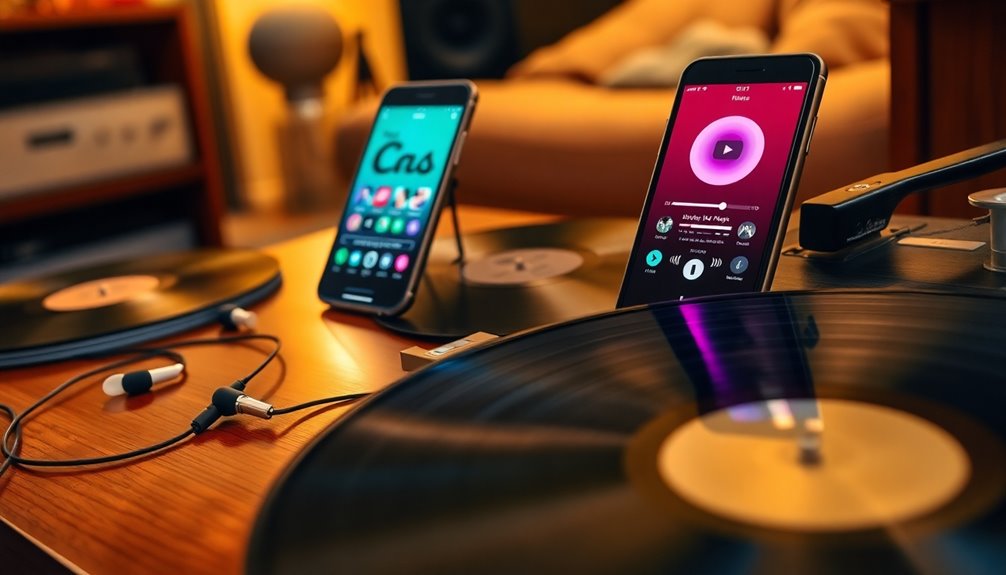
Music consumption has transformed dramatically, shifting from the tangible experience of vinyl records to the instant accessibility of streaming platforms. Vinyl's tactile nature and cultural significance create a nostalgic allure, whereas cassettes and digital formats paved the way for personalized listening. Today, algorithms improve music discovery through streaming services, aided by social media's viral influence. As listeners seek both convenience and connection, comprehending this evolution reveals deeper insights into the future trajectory of music engagement.
Article Highlights
- The transition from vinyl to streaming reflects a shift towards convenience and accessibility in music consumption.
- Vinyl offers a tactile and nostalgic experience, while streaming provides instant access to vast music libraries.
- Streaming services use personalized playlists and algorithms to enhance user engagement and music discovery.
- Social media platforms, like TikTok, have transformed how listeners discover and share music trends rapidly.
- Emerging technologies, such as AI-driven playlists and immersive audio, are redefining future listening habits.
The Rise of Vinyl: A Nostalgic Revolution
As the digital age continues to dominate music consumption, one might wonder why vinyl records have made such a remarkable comeback. This vinyl revival can be attributed to a collective yearning for nostalgic experiences that digital formats often lack. Many listeners appreciate the tactile nature of vinyl—the act of placing a record on a turntable, the crackle of sound as the needle meets the groove. These sensory elements create a more immersive engagement with music. Furthermore, the larger album artwork and the physicality of owning a record cultivate a deeper connection to the artist's vision. For many, vinyl isn't just about sound quality; it's a cultural statement, a celebration of music's rich history amidst the convenience of streaming.
The Birth of Cassette Tapes and Walkmans
The introduction of cassette tapes and Walkmans transformed how people experienced music, making it more portable than ever before. This shift not only altered personal listening habits but likewise had a profound impact on music culture, paving the way for the eventual change to digital formats. As individuals embraced the freedom of on-the-go music, the terrain of the music industry began to change dramatically.
Rise of Portable Music
During the evolution of music, technology has often focused on the grandeur of home audio systems; the rise of portable music during the late 20th century marked a transformative shift in how people consumed music. With the introduction of cassette tapes and Walkmans, portable devices became crucial for on-the-go listening. This innovation offered unprecedented music convenience, allowing individuals to carry their favorite albums wherever they went. Although audio quality varied, many users prioritized accessibility and the ability to curate personal soundtracks during daily activities. The allure of portable music fundamentally changed listening habits, highlighting a demand for flexibility that would continue to shape the industry as technology advanced. In the end, this era laid the groundwork for the digital streaming age that followed.
Impact on Music Culture
As the advent of cassette tapes and Walkmans transformed the way music was consumed, it equally profoundly influenced music culture as a whole. These portable formats allowed for greater music identity, enabling listeners to curate personalized mixtapes that reflected their tastes and emotional connections. Cultural shifts emerged as genre exploration became accessible, encouraging fans to engage with diverse musical styles. Community engagement thrived, with individuals bonding over shared playlists and cassette-swapping. Nevertheless, accessibility issues arose as not everyone could afford the technology. Live performances shifted, as artists began to reflect on fan interaction in new ways, influenced by the intimate nature of personal listening experiences. Furthermore, music education evolved, incorporating these new formats to inspire creativity and insight among aspiring musicians.
Transition to Digital Formats
Though the introduction of cassette tapes and Walkmans marked a pivotal shift in music consumption, it likewise laid the groundwork for the digital transformation that followed. These formats allowed for unprecedented portability and personalization in music listening, ushering in a new era of convenience. Their emergence highlighted the change from analog to digital evolution, serving as a bridge leading to future innovations.
| Format | Key Features |
|---|---|
| Cassette Tape | Portable, re-recordable |
| Walkman | Compact, battery-operated |
| Digital Formats | Streaming, high fidelity |
This format comparison emphasizes how cassette tapes and Walkmans changed the way people interacted with music, paving the way for today's streaming services and digital libraries.
CDs and the Quest for Perfect Sound
During the digital age has ushered in a myriad of ways to listen to music, CDs continue to captivate audiophiles in their relentless pursuit of perfect sound. With a focus on audio quality, CDs offer a level of music fidelity that many believe surpasses digital formats. Listener preferences often lean toward the tangible experience of handling a physical disc, which can feel more rewarding than streaming. Furthermore, advancements in sound engineering have allowed for the production of CDs that deliver rich, dynamic audio, appealing to those who appreciate nuances in their favorite tracks. For many, the combination of high-resolution sound and the nostalgia of the CD format makes it an enduring choice in a constantly changing musical environment.
The Digital Age: MP3s and File Sharing
How has the rise of MP3s and file sharing transformed the way people experience music? The shift to digital downloads has transformed music consumption, allowing listeners unprecedented access to a vast library of tracks. This transformation can be summarized in four key points:
- Accessibility: Users can download music instantly from anywhere with internet access.
- Affordability: File sharing often reduces costs, enabling people to explore new genres without a financial commitment.
- Convenience: MP3s enable easy organization and portability; listeners can carry thousands of songs in their pockets.
- Community: File sharing cultivates a sense of connection among fans, as they share recommendations and playlists.
The digital age has not only changed how music is consumed but has additionally reshaped the music industry itself.
The Emergence of Online Music Stores
As file sharing became increasingly popular, online music stores emerged as a legitimate alternative for purchasing music. These digital storefronts offered users a legal and convenient way to access their favorite tracks. With platforms like iTunes and Amazon Music leading the charge, consumers gained unprecedented music accessibility, allowing them to explore vast libraries from the comfort of their homes. The rise of these stores not only catered to the demands of tech-savvy listeners but also provided artists with new revenue streams. By embracing this shift, the music industry adapted to changing consumer behaviors, emphasizing the importance of ownership and supporting musicians in an evolving digital environment. Ultimately, online music stores played a vital role in redefining how people bought and experienced music.
The Streaming Boom: Spotify, Apple Music, and Beyond
What has fueled the rapid rise of music streaming services like Spotify and Apple Music? The shift from physical to digital formats has transformed how listeners consume music. Key factors include:
- Playlist Personalization: Algorithms curate customized playlists, enhancing user experience.
- Subscription Models: Affordable monthly fees provide access to vast libraries, appealing to budget-conscious consumers.
- Convenience: Instant access to millions of songs on multiple devices simplifies listening.
- Social Sharing: Features that allow users to share playlists nurture community and engagement.
These elements have not merely attracted millions of subscribers but also reshaped the music industry environment. As consumers increasingly prioritize flexibility and personalization, traditional models struggle to keep pace with the dynamic streaming boom.
The Impact of Social Media on Music Discovery
In what ways has social media transformed the way people discover music? Today, platforms like TikTok and Instagram play pivotal roles in music discovery, often driven by viral challenges and influencer recommendations. Users engage with music through user-generated content, creating a dynamic space where tracks can skyrocket to fame overnight. Musical hashtags allow listeners to explore trending songs, while playlist sharing nurtures community and collaboration. Furthermore, algorithmic suggestions tailor music discovery to individual tastes, enhancing the social listening experience. These collaboration platforms empower artists to connect directly with fans, making music discovery more interactive than ever. In the end, social media’s impact on music discovery has reshaped how artists are promoted and how audiences engage with new sounds. This shift has also influenced aspiring musicians, who now have greater access to resources on how to write meaningful lyrics and craft songs that resonate with online audiences. As a result, emerging artists can experiment with different styles and receive instant feedback, allowing them to refine their sound based on audience engagement. Ultimately, social media has made music discovery more participatory, bridging the gap between artists and listeners in unprecedented ways.
The Vinyl Resurgence: A Modern Trend
The resurgence of vinyl records reflects a growing appreciation for nostalgia and the tangible aspects of music. Collectors are drawn not merely to the rich sound quality but likewise to the striking album artwork that accompanies each record. Recent sales statistics highlight this trend, revealing a remarkable increase in vinyl sales that underscores its renewed popularity in the current digital era.
Nostalgic Appeal of Vinyl
Vinyl records have made a remarkable comeback, enchanting a new generation of listeners with their distinct charm and authenticity. This resurgence taps into vinyl nostalgia, as fans appreciate not just the sound, but the entire tactile experience. The pleasure of handling records, placing a needle on the groove, and the warmth of analog sound creates a deep connection with music.
Here are four reasons why vinyl's appeal is so strong today:
- Rich Sound Quality: Many argue that vinyl offers a warmer, fuller sound compared to digital formats.
- Physicality: The act of playing vinyl records engages listeners in a way that simply pressing play on a device doesn't.
- Collective Experience: Sharing music on vinyl cultivates a sense of community.
- Artistic Presentation: Larger album covers provide a unique canvas for artistic expression.
Collectibility and Artwork
As vinyl records have surged in popularity, a significant aspect of this revival centers around their collectibility and the stunning artwork that accompanies them. Collectors are increasingly drawn to limited edition releases, which often feature unique album artwork and improved vinyl aesthetics. These collectible editions not only provide a tangible connection to the music but also serve as valuable pieces of music memorabilia. The large format of vinyl allows for intricate designs that can transform a simple album cover into a visual masterpiece, elevating the listening experience. This combination of auditory and visual appeal has solidified vinyl's place in contemporary culture, making it more than just a medium for music, but a cherished collectible for enthusiasts and art lovers alike.
Vinyl Sales Growth Statistics
In recent years, vinyl sales have experienced a remarkable resurgence, with 2022 marking the first time since the 1980s that vinyl outsold CDs in the United States. This trend signifies not just nostalgia but a shift in music consumption. The vinyl revenue growth has captivated both casual listeners and seasoned collectors, reflecting diverse collector demographics. Key statistics include:
- Vinyl sales reached over $1 billion in 2022.
- Younger audiences (ages 18-24) now represent 50% of vinyl buyers.
- More than 40% of vinyl purchasers own over 50 records.
- Sales of vinyl records have grown for 16 consecutive years.
These figures highlight the enduring appeal of vinyl, making it a significant player in today's music industry environment.
The Pros and Cons of Music Consumption Methods
Even though music consumption methods have evolved considerably over the years, each approach carries its own set of advantages and drawbacks. The debate often centers around physical vs digital formats, and the trade-offs between convenience vs quality.
| Pros | Cons |
|---|---|
| Physical | Physical |
| Tangible experience | Bulky and less portable |
| Superior sound quality | Requires maintenance |
| Digital | Digital |
| Instant access | Potential for lower quality |
| Highly portable | Reliant on internet access |
Future Trends in Music Listening Habits
As music consumption evolves, AI-driven playlists are set to redefine personalized listening experiences, tailoring selections to individual preferences with remarkable precision. Furthermore, immersive audio technologies promise to improve how listeners engage with music, creating environments that resonate with emotional depth and spatial awareness. Together, these trends suggest a future where music is not just heard but deeply felt, transforming the act of listening into a more interactive and enriching experience.
AI-Driven Playlists
With the rapid advancement of artificial intelligence, music streaming platforms are increasingly leveraging this technology to curate personalized playlists, transforming how listeners discover and enjoy music. AI recommendations and algorithmic curation improve user engagement, making music exploration more dynamic. These platforms utilize vast data to offer:
- Mood-based suggestions: Playlists customized to listeners' emotional states.
- Genre exploration: Encouraging users to explore new musical territories.
- Collaborative playlists: Allowing friends to contribute and share their music tastes.
- Data-driven discovery: Analyzing listening habits to refine and enhance recommendations.
As AI continues to evolve, these personalized playlists will redefine music consumption, nurturing a deeper connection between artists and their audiences.
Immersive Audio Experiences
The evolution of personalized playlists through AI has set the stage for the next wave of music consumption: immersive audio experiences. As technology advances, listeners are increasingly drawn to immersive soundscapes that transport them into the heart of the music. Surround experiences, made possible by spatial audio techniques, improve the way individuals engage with their favorite tracks. These innovations allow sounds to emanate from all directions, creating a three-dimensional auditory environment that feels alive. With platforms now offering high-resolution audio and access to sophisticated sound engineering, the listener's exploration becomes more intimate and enchanting. As people seek deeper connections with music, immersive audio experiences are poised to redefine the listening environment, inviting audiences to explore a new domain of sonic possibilities.
Frequently Asked Questions
How Has Music Listening Affected Our Mental Health?
Melodic melodies and rhythmic rhythms can greatly shape an individual's psyche. Music therapy has emerged as an influential tool, nurturing emotional connections that improve well-being. Research reveals that engaging with music can alleviate anxiety, boost mood, and promote relaxation. It's not just about sound; it's about the profound impact music has on mental health. By tapping into these emotional connections, individuals often find solace, strength, and support in their personal struggles.
What Role Do Algorithms Play in Music Recommendations?
Algorithms play an important role in music recommendations by analyzing listeners' behaviors and preferences. Their accuracy in predicting songs greatly improves user satisfaction. Nevertheless, over-reliance on popular trends can limit recommendation diversity, often leading to repetitive playlists. To truly elevate the listening experience, it's vital for algorithms to balance accuracy with a broader range of genres and artists, ensuring users discover new sounds during still enjoying familiar favorites.
Can Streaming Services Replace Live Music Experiences?
The question of whether streaming services can replace live music experiences sparks debate. As streaming offers convenience and access to vast catalogs, it can't replicate the energy of a live performance. Virtual concerts attempt to bridge this gap, yet they often lack the visceral connection found in person. Fans crave the atmosphere, spontaneity, and shared excitement of attending a concert, making it clear that streaming, though valuable, won't fully replace the magic of live music.
How Do Artist Royalties Differ Across Platforms?
When examining artist royalties, one can't help but notice the striking platform disparities that exist. Digital royalties vary considerably across streaming services; for instance, Spotify pays a fraction per stream compared to Apple Music. This discrepancy can greatly impact an artist's income, often leading to frustration. As listeners embrace convenience, the intricacies of these platforms highlight the challenges artists face in maneuvering their financial environment in the evolving music industry.
What Are the Environmental Impacts of Music Consumption Methods?
The environmental impacts of music consumption methods are significant. Traditional formats like vinyl often rely on sustainable materials, but the production and transportation still consume resources. Conversely, digital streaming reduces physical waste but contributes to digital waste from outdated devices. Both methods present challenges; whereas vinyl can be environmentally friendly when sourced responsibly, streaming's energy consumption and electronic waste pose ongoing sustainability concerns. Balancing enjoyment with eco-consciousness is crucial for music lovers today.