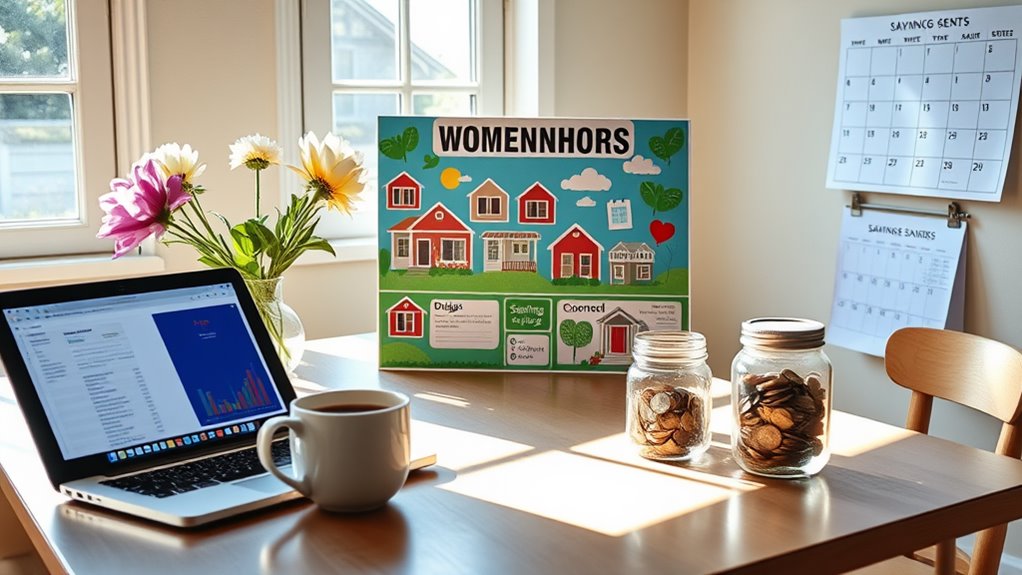
To save for a down payment on a dream home, one should first set a clear savings goal. Opening a high-interest savings account can maximize growth. Automating contributions guarantees consistency. Budgeting is crucial, focusing on cutting unnecessary expenses. Taking advantage of employer benefits and wisely using windfalls can further boost savings. Finally, visual reminders improve motivation. Regularly reviewing and adjusting the plan keeps efforts on track. Discover additional strategies to reinforce your savings approach.
Set a Clear Savings Goal
Setting a clear savings goal is essential for anyone aiming to purchase a home. Individuals who establish specific financial targets can take charge of their saving process, ensuring that each dollar contributes effectively toward their dream. By identifying savings milestones, they can track progress and maintain motivation. For example, breaking down the total down payment into smaller, manageable amounts allows for a sense of accomplishment as each milestone is reached.
Moreover, goal visualization plays a significant role in the process. When individuals picture their future home, they are more likely to stay committed to their savings plan. This mental image reinforces their determination, helping them resist the temptation to spend impulsively. By combining well-defined savings goals with consistent monitoring and visualization techniques, aspiring homeowners can create a robust framework that empowers them to achieve their financial objectives with confidence and control.
Open a High-Interest Savings Account
A high-interest savings account can greatly improve the savings path for potential homeowners. By selecting an account that offers high yield options, individuals can maximize their savings without incurring risks associated with investments. These accounts typically feature competitive interest rates, allowing funds to grow more effectively over time.
Furthermore, many high-interest savings accounts come with beneficial account features, such as no monthly maintenance fees and easy online access, which can improve the overall savings experience. Potential homeowners should look for accounts that provide flexibility regarding deposits and withdrawals as well as still delivering strong interest returns.
Automate Your Savings
Automating savings can greatly improve the ability to accumulate funds for a down payment. By setting up direct deposit to automatically transfer a portion of income into a dedicated savings account, individuals can guarantee consistent contributions. Furthermore, utilizing savings apps can streamline this process, making it easier to track and manage savings goals.
Set Up Direct Deposit
Establishing a direct deposit can greatly streamline the savings process for individuals aiming to accumulate a down payment. By automating savings through direct deposit setup, individuals can guarantee a predetermined amount is consistently transferred to their savings account with each paycheck. This method minimizes the temptation to spend and reinforces a disciplined savings strategy. The direct deposit benefits include increased convenience and the ability to track savings growth effortlessly. Individuals maintain control over their finances by designating specific amounts for savings, assuring that their goals remain a priority. Implementing this straightforward system not only simplifies the savings experience but additionally nurtures a proactive approach to achieving homeownership aspirations.
Use Savings Apps
Numerous individuals looking to save for a down payment find that using savings apps can greatly improve their financial discipline. These apps often include savings app features that allow users to set specific savings goals and automate transfers from checking accounts. By utilizing budgeting app comparisons, users can select an app that aligns with their financial habits and preferences, ensuring they maintain control over their savings process. Many savings apps offer customizable alerts and progress tracking, making it easier for users to stay focused on their targets. This automation not only simplifies saving but also encourages consistent contributions, ultimately resulting in a more substantial down payment. By leveraging technology, individuals can take charge of their financial futures with confidence.
Create a Budget and Cut Unnecessary Expenses
Even though saving for a down payment can feel overwhelming, creating a budget and cutting unnecessary expenses is a crucial first step. By implementing effective expense tracking, individuals can gain a clear comprehension of their financial habits. This allows them to identify areas where discretionary spending can be reduced.
Establishing budget categories is crucial for organizing finances and prioritizing savings goals. By allocating specific amounts to necessities and limiting spending in non-essential categories, individuals can redirect funds toward their down payment savings.
Regularly reviewing and adjusting the budget guarantees that it remains aligned with changing financial situations and savings objectives. This proactive approach not merely cultivates a sense of control over finances but additionally builds momentum toward achieving the dream of homeownership. In the end, with discipline and focus, individuals can transform their budgeting efforts into a strong tool for reaching their financial goals.
Take Advantage of Employer Benefits
Many individuals overlook the potential financial advantages offered by their employers, which can greatly aid in saving for a down payment. Taking advantage of employer contributions can considerably boost savings. Employers may provide programs that facilitate direct contributions to savings accounts or offer educational resources that help employees understand their benefits better.
| Benefit Type | Description |
|---|---|
| 401(k) Matches | Employers match a portion of employee contributions. |
| Flexible Spending Accounts | Pre-tax deductions for medical expenses. |
| Employee Assistance Programs | Guidance on financial planning and education. |
| Tuition Reimbursement | Financial support for further education. |
| Housing Assistance | Programs to help with down payment savings. |
Utilizing these benefits requires proactive engagement in benefits education, enabling individuals to make informed decisions that maximize their savings in the direction of a dream home.
Explore Government Assistance Programs
As individuals often focus on personal savings strategies, government assistance programs can play an important role in helping prospective homebuyers reach their down payment goals. These programs are designed to alleviate financial barriers and offer various options that provide vital support. Federal grants, for instance, can greatly reduce the amount needed upfront, making homeownership more attainable.
Many states likewise have their own programs customized to assist residents in their pursuit of homeownership. These state programs may offer down payment assistance, low-interest loans, or tax credits, which can improve a buyer’s financial position. Before applying, prospective buyers should research the specific eligibility requirements and benefits each state program offers. It’s also essential to ask important questions before buying a home, such as understanding long-term financial responsibilities and the impact of loan terms on overall affordability. Taking advantage of these state resources can make homeownership more accessible and financially sustainable.
Consider Side Hustles for Extra Income
Exploring side hustles can greatly boost an individual's income, providing a valuable means to accelerate down payment savings. By engaging in freelance opportunities, individuals can leverage their skills and expertise to generate additional revenue. This approach not only promotes financial independence but also improves one's ability to save effectively.
Utilizing gig platforms such as Upwork or Fiverr can open doors to various short-term projects, allowing individuals to work on their own terms. These platforms cater to a wide range of talents, from graphic design to writing and programming. By strategically selecting projects that align with personal strengths, one can maximize earnings while maintaining control over their schedule.
Moreover, the flexibility of side hustles enables individuals to balance their primary job and personal commitments, ensuring that their pursuit of a dream home does not come at the expense of their current lifestyle. Embracing these opportunities can greatly expedite the process to homeownership.
Use Windfalls Wisely
Side hustles can provide a much-needed boost to savings, but individuals often encounter unexpected financial windfalls that can further aid their down payment goals. These financial windfalls, such as unexpected bonuses from work or inheritance, should be approached with strategy and foresight.
Instead of viewing these gains as opportunities for immediate spending, individuals should prioritize funneling them into their home savings accounts. By consciously redirecting these funds, one can greatly accelerate their path toward homeownership.
Additionally, creating a clear plan for utilizing windfalls can improve financial control. Setting specific savings targets or establishing an emergency fund can guarantee that these unexpected bonuses contribute to long-term stability rather than short-term indulgence.
Ultimately, making the most of financial windfalls can transform an individual's savings strategy, bringing them one step closer to achieving their dream home.
Save Your Tax Refund
Maximizing tax refunds can greatly boost savings for a down payment. By implementing effective tax refund strategies, individuals can guarantee that their tax benefits contribute directly to their homeownership goals. Instead of spending this financial windfall, setting it aside can greatly improve savings.
Key considerations include:
- Reviewing Tax Deductions: Confirm all eligible deductions are claimed to maximize the refund amount.
- Contributing to Retirement Accounts: Utilize tax-advantaged accounts to lower taxable income, potentially increasing the refund.
- Adjusting Withholding: Fine-tune paycheck withholding to avoid large refunds, allowing for consistent savings throughout the year.
Stay Motivated With Visual Reminders
To maintain motivation during saving for a down payment, individuals can utilize visual reminders effectively. Creating a vision board, using savings tracker apps, and displaying motivational quotes are practical strategies that can inspire continued progress. These tools serve to reinforce goals and keep the desired outcome at the forefront of one's mind.
Vision Board Creation
Inspiration often fuels the expedition toward saving for a down payment, making vision board creation an excellent tool for maintaining motivation. By visually representing goals, individuals can utilize the strength of focus and intention. Effective vision boards require thoughtful selection of vision board materials and strategic vision board techniques.
- Images of Dream Homes: Select pictures that resonate with personal aspirations.
- Quotes for Encouragement: Incorporate motivational phrases that inspire persistence.
- Financial Milestones: Visualize specific savings targets to create a sense of achievement.
Savings Tracker Apps
Visual representations like vision boards can serve as a strong motivator on the path to saving for a down payment. Savings tracker apps improve this motivation by providing users with clear visual progress in relation to their savings goals. These apps often include features such as customizable savings plans, goal-setting tools, and progress charts that allow users to monitor their expedition effectively. By using app features like notifications and reminders, individuals maintain focus and discipline in their saving efforts. Additionally, the ability to visualize milestones achieved cultivates a sense of accomplishment and control over financial decisions. In the end, savings tracker apps empower users to stay committed and organized as they work towards their dream home.
Motivational Quotes Display
Incorporating motivational quotes into daily routines can greatly improve one's commitment to saving for a down payment. By surrounding oneself with inspirational quotes and motivational messages, individuals can reinforce their goals and maintain focus. These visual reminders serve as influential tools to cultivate determination and drive.
- Place motivational quotes on mirrors or workspaces for constant visibility.
- Utilize digital wallpaper featuring inspiring phrases on devices.
- Create a dedicated board with quotes that resonate personally.
These strategies not only boost motivation but also instill a sense of accountability. As individuals encounter their goals daily, they are more likely to stay engaged in the saving process, in the end moving closer to achieving their dream home.
Review and Adjust Your Plan Regularly
While setting a savings goal for a down payment is crucial, regularly reviewing and adjusting the plan is equally important to guarantee it remains realistic and achievable. This proactive approach allows individuals to stay in control of their financial path, ensuring that their financial goals align with their evolving circumstances.
| Review Frequency | Adjustments Needed |
|---|---|
| Monthly | Assess progress, refine budget |
| Quarterly | Reevaluate savings rate |
| Bi-Annually | Check interest rates, adjust savings accounts |
| Annually | Review financial goals, life changes |
| As Needed | React to unexpected expenses |
Frequently Asked Questions
How Long Does It Typically Take to Save for a Down Payment?
In a world of instant gratification, the question of how long it usually takes to save for a down payment reflects a desire for control over financial futures. Individuals often explore various saving strategies and down payment options, with timelines varying based on income, expenses, and goals. Typically, it may take several years of disciplined saving to accumulate enough for a substantial down payment, emphasizing the importance of commitment and planning in achieving homeownership.
What Percentage of My Income Should I Save Each Month?
Determining the percentage of income to save each month is crucial for effective financial planning. Experts suggest implementing savings strategies that typically recommend setting aside 20% of monthly income. Nevertheless, this can vary based on individual financial goals and circumstances. Employing budgeting techniques, such as tracking expenses and prioritizing savings, enables individuals to gain control over their finances and guarantee they meet their savings targets without compromising their lifestyle.
Can I Use My 401(K) for a Down Payment?
The allure of a 401(k) as a financial lifeline can be tempting, like a siren's call amidst turbulent waters. Individuals may consider 401(k) loans or hardship withdrawals for a down payment. Loans allow borrowing against retirement savings, but repayments are crucial. Hardship withdrawals, although accessible, may incur penalties and taxes. Steering through these options requires careful thought, as tapping into retirement funds can impact future financial security and stability.
What Are the Best Apps for Tracking My Savings Progress?
When considering the best apps for tracking savings progress, individuals often seek effective savings apps and budgeting tools that provide clarity and control over their finances. Popular options include Mint, which offers extensive budgeting features, and YNAB (You Need A Budget), known for its proactive approach to money management. These tools empower users to set goals, monitor expenses, and visualize their savings path, eventually enhancing their financial awareness and encouraging disciplined saving habits.
How Can I Improve My Credit Score While Saving?
In the intricate dance of financial health, improving one's credit score in addition to saving becomes a moment of strategic finesse. By mastering credit utilization—keeping it below 30%—and embracing disciplined debt management, individuals can steadily improve their scores. Regularly reviewing credit reports for inaccuracies as well empowers them, allowing for proactive corrections. Each step taken not only fortifies their financial foundation but likewise instills a sense of control over their economic destiny.